ERP Strategy for 3PLHub and Spoke Logistics Networks
Why 3PL Hub and Spoke Networks Choose 4bluefeet
We are not ERP resellers or general consultants. We are specialised logistics advocates with deep experience mapping Hub and Spoke operations. Our sole focus is ensuring your new ERP system is the perfect digital mirror of your highly optimised physical network.
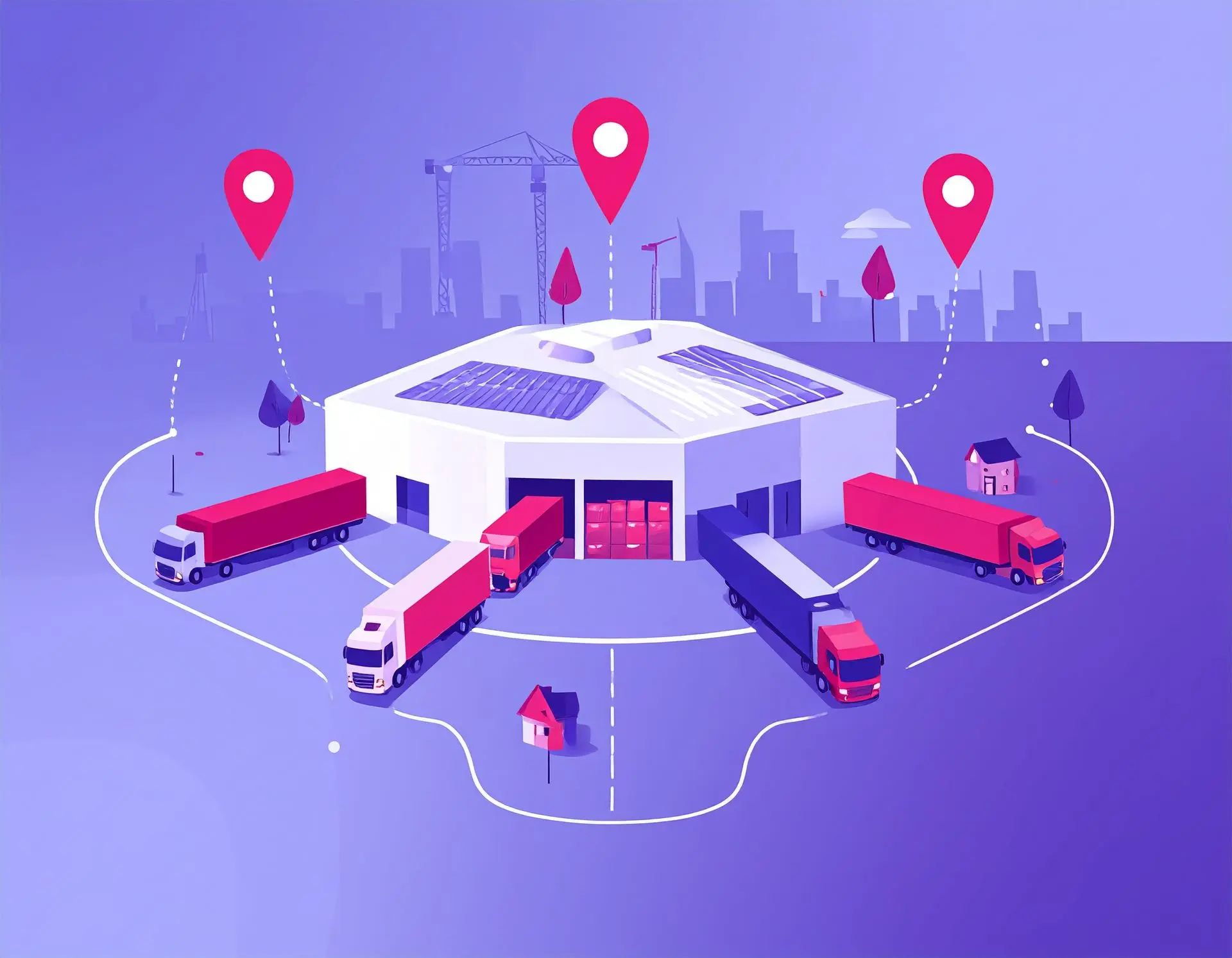
What is the Hub and Spoke 3PL Model?
Your Hub and Spoke network is built on razor-thin margins and speed. When it comes to digital transformation, the challenge isn't just implementing an ERP, but finding a system that can handle the sheer volume, velocity, and complexity of trunk route optimisation, final mile delivery, and intricate rate management. Choosing the wrong solution means losing money on every truckload, struggling with inaccurate financial reporting, and failing to effectively scale your network to meet customer demand.
The Hidden Cost of the Wrong ERP in Logistics
Many 3PL providers assume any generic ERP can handle their operations. They quickly discover the hidden costs:
Financial Leakage: ERPs often fail to properly integrate complex, multi-tiered rate cards, leading to massive reconciliation errors and lost revenue.
Operational Stalling: Inability to integrate seamlessly with specialised WMS and TMS systems breaks the trunk route flow, leading to fulfilment delays.
Vendor Lock-In: Accepting a solution from a sales team without an independent BRD leaves the 3PL vulnerable to scope creep and unexpected costs.
4bluefeet is your defensive barrier against these risks. We ensure your ERP foundation is unshakeable.
Our Expertise: Mapping Hub and Spoke Operations to ERP
We transform your unique logistics requirements into a functional ERP blueprint across three critical dimensions:
1
Network Integration (WMS and TMS)
2
Requirements Enforcement on Complex Freight
3
Financial Management and Digital Roadmap Guidance
Defining Your Digital Strategy: The 4bluefeet Blueprint
We start with a meticulous AS-IS Business Process Analysis (BPA) to map your current logistics operation. We then design the optimal TO-BE process, which serves as the non-negotiable blueprint for your digital transformation and ERP configuration.
This detailed analysis forms the foundation of the 4bluefeet methodology. Once the business blueprint is complete, we transition seamlessly into our rigorous 6-Step Assurance Process, guiding you through vendor selection, contract negotiation, and final system adoption. Our approach ensures your hub-and-spoke model is supported by a perfectly architected ERP solution.
Here are the critical areas where our BPA and design work directly enable successful ERP implementation:
1. Transportation & Freight Management Optimisation
The Problem: Hub-and-Spoke complexity makes optimising trunk routes, LTL consolidation, and customs compliance nearly impossible without precise digital planning. 4bluefeet's Solution: We define and model the ideal configuration for your Transportation Management System (TMS) within the ERP. This includes:
Designing automated logic for Trunk Route Scheduling and capacity management.
Structuring Rate Card Management for accurate costing and client invoicing across all delivery types (Parcel, LTL, FTL).
Building a framework for international shipping and Customs Brokerage data flows, ensuring compliance is handled automatically by the new system.
2. Financial Management & Contract Integrity
The Problem: High-volume transactions and complex tiered contracts often lead to invoice errors, lost revenue, and poor client relationships. 4bluefeet's Solution: We structure the digital processes needed to protect your revenue and client trust, ensuring the ERP system accounts for every detail. This involves:
Defining the hierarchy for Rate and Contract Management to eliminate manual errors in pricing logic.
Designing automated Invoice Auditing and Reconciliation processes that link transport manifests directly to billed amounts.
Establishing robust KPIs and reporting frameworks for Client Account Management within the ERP, improving visibility and strategic planning.
3. Technology & System Integration Architecture
The Problem: A successful 3PL requires seamless, real-time data exchange between its ERP, WMS, and client systems. Failures here cause immediate operational delays. 4bluefeet's Solution: We define the necessary integration architecture to connect your new ERP seamlessly across the ecosystem, guaranteeing end-to-end visibility. This includes:
Mapping out the data requirements for End-to-End Visibility (tracking) to ensure your ERP and WMS speak the same language.
Defining the protocols and data fields required for robust System Integration with client ERPs (SAP, Oracle, etc.) for automated order processing.
Designing the data models necessary for Audit and Analytics to future-proof your reporting and allow for continuous cost optimisation.
Once we have all the information required, we work with you to help you select and configure the very best ERP system for your complex Hub-and-Spoke business model.
Our Cross-Industry ERP Expertise
To fully optimise your network, a unified system strategy is critical. Our expertise extends beyond pure logistics consulting into the core operational pillars: defining and integrating efficient Warehouse Management Systems (WMS), selecting the right Transportation Management System (TMS) for your Trunk Routes, and expertly managing complex Freight/LTL operations. This holistic approach is essential for high-volume sectors, including large-scale E-commerce fulfilment and modern Retail distribution networks.
The 4bluefeet Methodology: A Six-Phase Roadmap to ERP Success
Implementing modern enterprise systems is a complex, high-stakes endeavour that requires a structured and predictable approach. Our proprietary 4bluefeet Methodology is the foundation of our Advocate service model, designed to systematically de-risk your entire transformation journey. We guide your organisation through six distinct, interlinked phases—from initial discovery and rigorous testing to successful go-live and sustained performance governance. This consistent, transparent roadmap ensures every critical decision and task is managed with precision, guaranteeing successful ERP adoption and long-term value realisation for your business.
Foundational Strategy & Baseline Architecture
Key Deliverable: The AS-IS/TO-BE Process Architecture and the Final Requirements Catalogue.
The Certified Blueprint Architecture
Key Deliverable: The 4bluefeet Blueprint Document (BRD), certified for technical feasibility.
Objective Vendor Selection & Investment Modelling
Key Deliverable: Validated Vendor Suitability Report and the Financial Investment Model.
Organisational Readiness & Adoption Framework
Key Deliverable: Change Impact Assessment (CIA) and the Organisational Readiness Framework.
Integrated Quality Assurance Oversight
Key Deliverable: iQA Sign-Off and the UAT Completion Certificate.
Cutover Assurance & Performance Governance
Key Deliverable: Cutover Readiness Audit and the Long-Term Governance Model.
Core ERP Questions for Hub-and-Spoke Logistics
Navigating a new or existing ERP system within a complex 3PL network presents unique challenges. We've compiled answers to the most critical questions our clients in the parcel and high-volume logistics industry ask regarding implementation, integration, and risk management.
A centralised ERP must be configured to manage WMS integration and support instantaneous Trunk Route tracking. When goods are scanned at the originating Spoke, the ERP records an in-transit status and immediately assigns the destination Hub. This ensures real-time visibility across the entire network, from "First Mile" collection to "Final Mile" delivery, allowing for accurate load planning and reconciliation at both the regional and national Hub levels.
The core financial challenge is the high complexity of Rate and Contract Management. A logistics ERP must automate the reconciliation of tiered pricing, fuel surcharges, accessorial fees (like liftgate or residential), and high-volume volume discounts. Without robust financial automation, manual invoice auditing and reconciliation become a major source of cost and error, directly impacting profitability and client satisfaction.
System integration is critically important. Modern 3PLs must offer seamless data exchange, often through APIs or EDI, to connect their operational systems (WMS, TMS) directly to their clients' systems. This integration ensures that customer orders are automatically ingested, inventory counts are synced, and End-to-End Visibility tracking is communicated instantly, eliminating manual data entry and reducing service latency.
The primary risk is disruption to high-volume operations, especially around peak season. Mitigation requires exhaustive Parallel Testing (running the old and new systems simultaneously) and ensuring Data Migration is 100% accurate, particularly for customer master data and complex routing tables. A phased, region-by-region rollout ("Big Bang" approaches are discouraged) and dedicated change management for sorting personnel are also essential risk controls.
Yes, a modern, specialised logistics ERP can handle both, but it requires dedicated modules for each function. The system must support the rapid, parcel-level tracking inherent in Express Delivery, while also managing the complex planning, load optimisation, and compliance requirements (e.g., hazmat, temperature control) of Freight Services (LTL/FTL). The key is ensuring a common data core links the two services for unified financial reporting.
Let's Connect
Your core business is efficiency. If your current ERP or spreadsheet-based system is slowing down your consolidation, trunk routes, or final mile delivery, the whole network suffers. Let's build a digital model that matches your physical one.