Producer-to-Packer Digital Strategy: Stop Financial System Leakage in Agri-Cooperatives
The Operational Complexity of Precision Agriculture (AgriTech)
Modern agriculture, often called AgriTech or Precision Agriculture, has moved far beyond traditional farming and is now a high-tech, data-driven supply chain operation. It is fundamentally about using technology to manage natural resources (land, water, nutrients) with maximum efficiency and minimal waste.

IOT Devices
Remote sensors, ground sensors, and telematics monitor crop health, soil, and machinery to provide real-time data for precision resource management.

Planting Precision
Farmers use RTK GPS for sub-inch accuracy to automatically optimise input use (seed, fertiliser, fuel) based on field-specific needs, maximising profit.
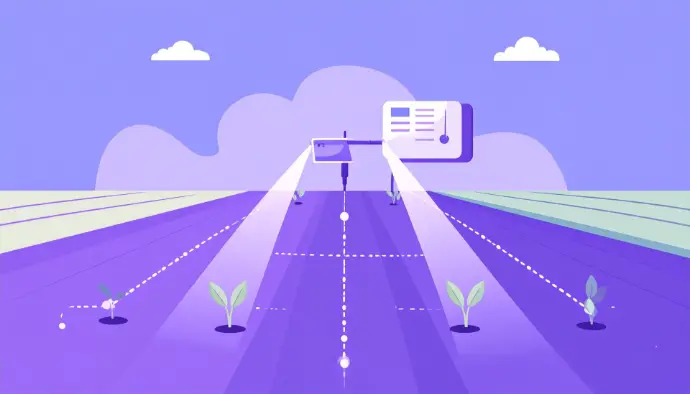
Automated and Smart Irrigation
On-farm weather stations and scheduling software use soil moisture and forecasts to precisely calculate water volume and timing for delivery via efficient drip irrigation.
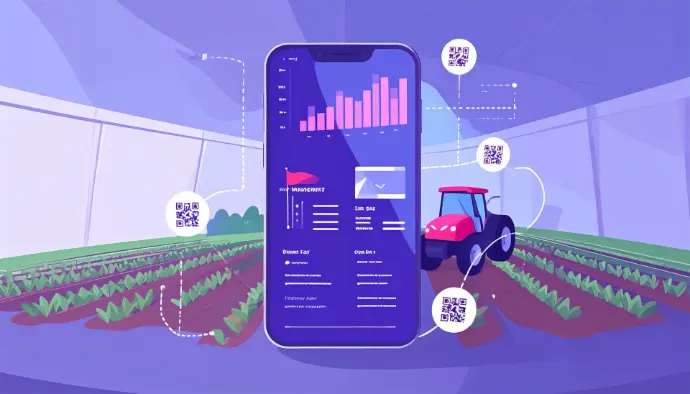
Operational and Asset Management
FMS (the farm ERP) centralises labour and inventory, enables predictive maintenance via telematics, and uses QR codes for end-to-end supply chain traceability and compliance.
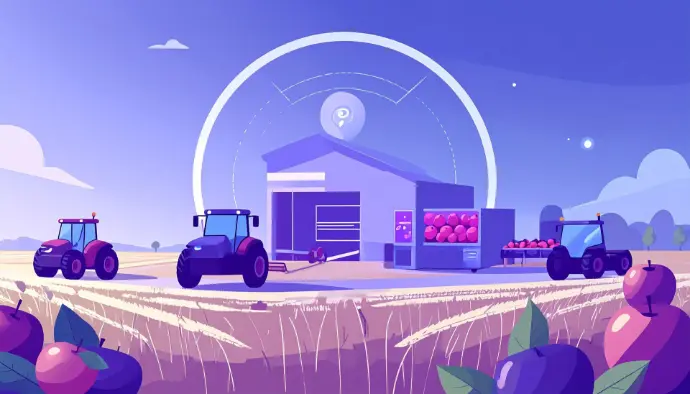
Harvesting and Post-Harvest Logistics
Yield mapping and AI sorting automatically record yield data and grade quality. Climate-controlled logistics then optimise storage and transport, minimising spoilage and informing next year's crop planning

Full Cost Control
The ERP precisely calculates Cost Per Ton by linking real-time resource consumption (fuel, labour, fertiliser) via telematics to the specific field task, ensuring total profitability control.
The Financial & Compliance Risk: Why Agribusinesses Leak Profit
Even the most advanced farming operations struggle with four hidden financial challenges:
Financial Leakage: Without precise integration, resource consumption (fertiliser, fuel, labour) is estimated, not accurately attributed, leading to an artificially low Cost Per Ton and poor pricing decisions.
Audit Risk: Complex regulations require instant, auditable proof that every chemical application and Lot ID is traceable back to the source. A manual or fragmented system exposes you to massive fines.
Asset Inefficiency: High-value assets, from harvesters to returnable packaging, sit idle or get lost, directly impacting the balance sheet due to missed maintenance or failure to recover assets.
Inaccurate Valuation: Inventory is often valued generically. If quality classification isn't linked to calculated Cost Per Ton, your General Ledger can misrepresent true asset value and profitability.
4bluefeet specialises in eliminating these risks by defining the exact system architecture required to achieve total, audit-proof financial control.
Defining the Digital Model: Business Process Analysis for Growers
Defining the Digital Model (Business Process Analysis)
We start with this meticulous Business Process Analysis (BPA) because it forms the non-negotiable foundation of the 4bluefeet methodology. Once this comprehensive blueprint is complete, we transition seamlessly into our rigorous 6-Step Assurance Process, guiding you through vendor selection, contract negotiation, and final system adoption. Our approach ensures your AgriTech operations are supported by a perfectly architected ERP solution that manages everything from Full Season Management to real-time compliance and job costing.
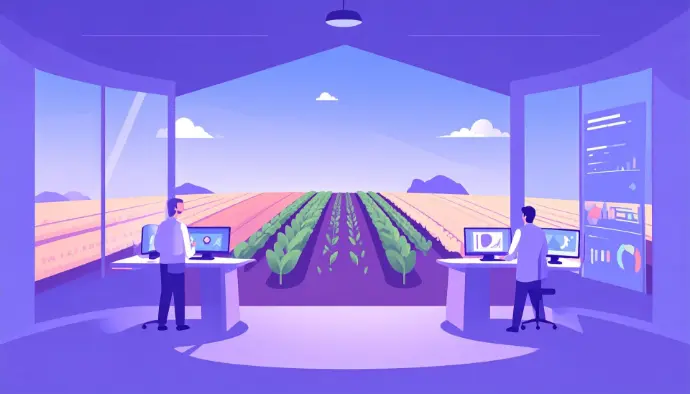
Crop and Yield Forecasting
This process transforms operational data into predictive business intelligence for strategic decision-making.

Post-Harvest Logistics, Compliance, and Sales
This process manages the physical product from the moment of planting, harvest and until sale, linking quality to final value.

Fleet, Asset, and Returnable Packaging Management
This area tracks all non-perishable assets, ensuring maximum operational uptime and recovery of valuable logistics assets.

Inventory, Traceability, and Quality Management
This process manages the physical product from the moment of planting, harvest and until sale, linking quality to final value.

Core Growing Operations and Job Costing
This analysis area ensures the you can track and attribute costs to the growing process, which is essential for determining true profitability.

IOT and System integrations
This process looks at what business critical information is required for the ERP system and what needs to be processed externally.
Defining Your Digital Strategy: The 4bluefeet Blueprint
A complex process requires a detailed analysis
Modern agriculture is a very complex operation, it not simply the case of plant something in the ground and hope for the best. We do a deep dive analysis into the way your modern operation operates looking for areas to enhance within your processes.
Crop and Yield Forecasting
This process transforms operational data into predictive business intelligence for strategic decision-making.
Probabilistic Yield Estimation: The primary requirement is that the system generates a probabilistic yield forecast (e.g., "We project x amount of tons/acre with 80% confidence").
Scenario Planning: Managers must be able to run "what-if" scenarios (e.g., impact of late planting on harvest quality, flood or drought) to optimise operational timing and hedge risks.
Resource Forecasting: Based on the predicted yield, we would look at automatically project future logistical needs, such as required silo space, transport capacity, and seasonal labour requirements.
Crop Rotation and Generation of Field: Field generation of harvested crop and any needed rotation and planned set aside.
Digital Integration
This process looks at what business critical information is required for the ERP system and what needs to be processed externally
- Data Integration for Modelling: The use of operational and external data (historical yield maps, current planting density, real-time weather feeds) to generate forecasts.
- Full system Architecture: API interactions, IOT, Datalakes, IPAS etc.,
Core Growing Operations and Job Costing
This analysis area ensures the you can track and attribute costs to the growing process, which is essential for determining true profitability.
Activity-Based Costing Requirements: Every field task (planting, spraying, sampling, harvesting) as a cost centre. Your requirements must mandate the system automatically calculates the accurate Cost Per Unit of Output (e.g., Cost per Ton) by accumulating:
Direct Inputs: Exact quantity of inputs consumed (deducted from inventory via Variable Rate Application (VRA) data).
Labour: Direct hours worked, tracked by task and location.
Fleet Costs: Depreciation, fuel, and maintenance costs attributed to the specific job.
Compliance and Application Tracking (CRITICAL PROCESS): Storage of (GPS coordinates), and concentration of every chemical application. This data must be instantly accessible for regulatory audits. Results from field samples, sample area and further testing results including post harvest testing.
Budget vs. Actuals: The use of real-time variance reporting showing how actual costs compare to the budgeted cost for a specific crop/field.
- Environmental Management: Utilising sophisticated HVAC and automated venting to maintain precise temperature and humidity (VPD) levels, along with CO2 enrichment and dynamic LED lighting to optimise photosynthesis.
- Precision Fertigation: Growing in soilless media (hydroponics) and using automated dosing computers to mix and deliver tailored nutrient solutions (pH and EC adjusted) directly to the roots.
- Water Recirculation: Operating closed-loop systems where unused nutrient water is collected, sterilised, and reused, drastically cutting water consumption and eliminating runoff.
- Logistics Automation: Employing mobile bench or gutter systems, conveyors, and sometimes robotics to move plants for processing, making labour more efficient and enabling high planting density.
- Biosecurity & IPM: Strict adherence to Integrated Pest Management (IPM), relying on beneficial insects and controlled atmospheric pressure to prevent pests and reduce the need for chemical sprays.
Inventory, Traceability, and Quality Management
This process manages the physical product from the moment of planting, harvest and until sale, linking quality to final value.
Lot and Quality Tracking: Capture from plating (even previous generation if replanting is used) at the point of harvest, the Lot/Batch ID and the verified Quality Classification (e.g., "Grade 1 Premium," "Feed Grade"). This quality metric directly dictates the sales price.
Two-Way Traceability: The analysis must enforce strict, auditable traceability. The system must link a final sales shipment back to the specific field, harvest date, and chemical application lot.
Inventory Valuation and Post Harvest Control: Harvested inventory based must be based on its Quality Class, applying the calculated Cost Per Ton (from Job Costing) to the specific lots in storage, ensuring accurate asset valuation.
Method of storage: How the harvest crop is stored (e.g., "cold storage", "ambient" etc) and it's effect on the P/L.
Fleet, Asset, and Returnable Packaging Management
This area tracks all non-perishable assets, ensuring maximum operational uptime and recovery of valuable logistics assets.
Preventative Maintenance (PM) Integration: The primary requirement is automatic scheduling. Telematics data (machine hours, odometer readings) from vehicles to automatically trigger preventative maintenance work orders based on usage thresholds.
Cost Attribution & Depreciation: Tracking of all expenses against the specific Asset ID (e.g., Combine Harvester #3). This allows for calculating the true Cost of Ownership and integrating depreciation into the General Ledger.
Returnable Asset Tracking: Management the lifecycle and location of high-value, reusable packaging (boxes, crates, pallets). Requirements must specify the system can track:
Issuance: When a box is sent out with a shipment.
Location: Tracking which customer or distribution centre currently holds the assets.
Recovery: Tracking when the assets are returned and audited, ensuring the farm doesn't lose high-value packaging.
Post-Harvest Logistics, Compliance, and Sales
This final stage links product quality and necessary documentation to the financial transaction.
Price Per Ton by Quality Class: The core financial requirement: The ERP must support sales orders where the price per ton is automatically derived from the product's verified quality classification stored in inventory.
Phytosanitary Certification (CRITICAL PROCESS): The ERP must automate the generation and tracking of all required Phytosanitary Certificates and other mandatory export/shipping documents. Requirements must specify that the system can link the certificate number directly to the specific Lot ID being shipped and store the certificate history digitally for compliance auditing.
Forward Contracts Management: The system needs the sophistication to track and manage sales contracts for future delivery dates, integrating them with the production forecast to ensure fulfilment.
Automated Revenue Recognition: All sales activities must automatically post to the General Ledger (GL) based on the transfer of custody (e.g., product leaves the packing shed), adhering to GAAP principles.
Our Cross-Industry ERP Expertise
The agriculture sector deals with unique B2B complexities like product perishability, strict traceability, and weight-based inventory challenges that demand precision supply chain execution. Whether you're integrating specialised WMS software for tracking lot codes, optimising transport management for cold chain integrity, coordinating with specific cold-chain fulfilment houses, or setting up a robust hub and spoke network for rapid distribution of seasonal goods, your core ERP integration is non-negotiable. Define the operational blueprint for Wholesale E-commerce success for your agricultural business to master these complex supply chain variables.
The 4bluefeet Methodology: A Six-Phase Roadmap to ERP Success
Implementing modern enterprise systems is a complex, high-stakes endeavour that requires a structured and predictable approach. Our proprietary 4bluefeet Methodology is the foundation of our Advocate service model, designed to systematically de-risk your entire transformation journey. We guide your organisation through six distinct, interlinked phases—from initial discovery and rigorous testing to successful go-live and sustained performance governance. This consistent, transparent roadmap ensures every critical decision and task is managed with precision, guaranteeing successful ERP adoption and long-term value realisation for your business.
Foundational Strategy & Baseline Architecture
Key Deliverable: The AS-IS/TO-BE Process Architecture and the Final Requirements Catalogue.
The Certified Blueprint Architecture
Key Deliverable: The 4bluefeet Blueprint Document (BRD), certified for technical feasibility.
Objective Vendor Selection & Investment Modelling
Key Deliverable: Validated Vendor Suitability Report and the Financial Investment Model.
Organisational Readiness & Adoption Framework
Key Deliverable: Change Impact Assessment (CIA) and the Organisational Readiness Framework.
Integrated Quality Assurance Oversight
Key Deliverable: iQA Sign-Off and the UAT Completion Certificate.
Cutover Assurance & Performance Governance
Key Deliverable: Cutover Readiness Audit and the Long-Term Governance Model.
Addressing Agri Complexity and Financial Integrity
Agri-cooperatives face unique challenges due to the scale, traceability requirements, and producer-centric governance model. This section answers the key questions we receive from CEOs and CFOs who need to move beyond standard ERP functionality to achieve full financial visibility from field to distribution.
Achieving precise financial data is central to our process. We implement Activity-Based Costing Requirements by analysing every field task (planting, spraying, harvesting) as a cost centre. This allows the system to accurately accumulate Direct Inputs, Labour, and Fleet Costs to determine the exact, auditable Cost Per Ton for every crop lot, ensuring true profitability control.
We focus on enforcing strict Two-Way Traceability. Our analysis mandates systems that link a final sales shipment back to the specific field, harvest date, and chemical application lot. This includes managing Compliance and Application Tracking (storing GPS coordinates and concentration data) and automating the generation and tracking of Phytosanitary Certificates for export.
We design processes to transform raw operational data into predictive business intelligence, primarily through Crop and Yield Forecasting. This includes developing requirements for Probabilistic Yield Estimation (projecting tons/acre with confidence levels) and enabling Scenario Planning so managers can run "what-if" analyses (e.g., impact of late planting) to optimize operational timing and hedge financial risks.
Stop Guessing Your True Cost-Per-Ton.
Your digital transformation starts here. Schedule a 30-Minute Digital Readiness Consultation to pinpoint the exact failure points in your current system and define a clear, fixed-scope roadmap for your next ERP initiative.